
The Piano in Room 704 · Chapter 1
The Piano in Room 704 — Complete Story
AI translation from the Thai original ไทย
Original fiction and illustrations created with AI for STORY.RED. All characters and events are fictional.
Jae knocked on the door of room 704 just before one in the morning. He meant to ask the tenant to stop repeating the same three notes, but when the door opened, the twenty-nine-year-old man before him had red-rimmed eyes and a brace on his right hand.
“I'm sorry. I'll stop,” Eun said before Jae could open his mouth.
Jae, a thirty-year-old potter, looked at the other man's hand and said they could talk tomorrow. Then he went back to his room without asking his name.
The next morning, Jae left a cup he had made outside the door with a note saying he was happy to agree on a piano schedule. Eun returned the cup with hot tea inside.
“You didn't have to return the cup,” Jae said.
“Then what should I give you in return?”
“You could tell me your name.”
Eun looked at him as if the request were too simple to be real. Then he answered slowly and asked Jae's name in return.
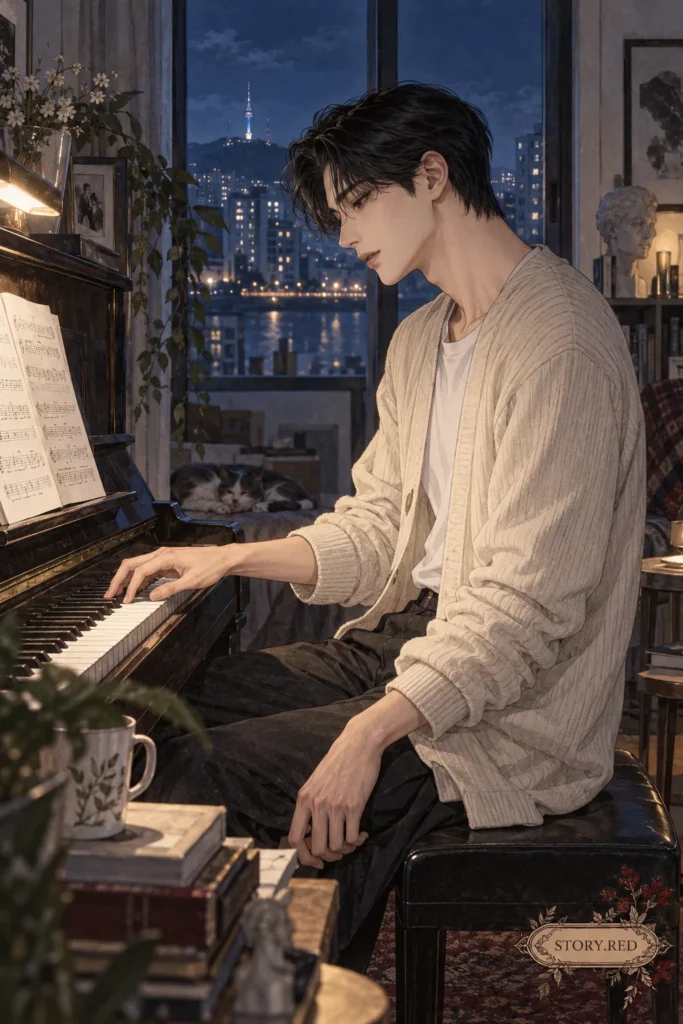
Eun had been a professional pianist before an accident limited the use of his right hand. His treatment was ongoing, but no one could say whether he would ever play the way he used to.
He kept the letters canceling his performances in a drawer and read them every day he played a wrong note.
Jae did not promise Eun would recover or say that love could heal his hand. He only asked what time he should bring tea.
Eun began letting his neighbors know when he planned to play. After work, Jae came back to listen, carrying clay that needed kneading.
“Don't you get bored?”
“I get bored when you let your tea go cold,” Jae replied. Eun gave a small laugh.
One day, Eun played a short piece to the end with his left hand. Jae applauded, then asked if he could learn the other half.
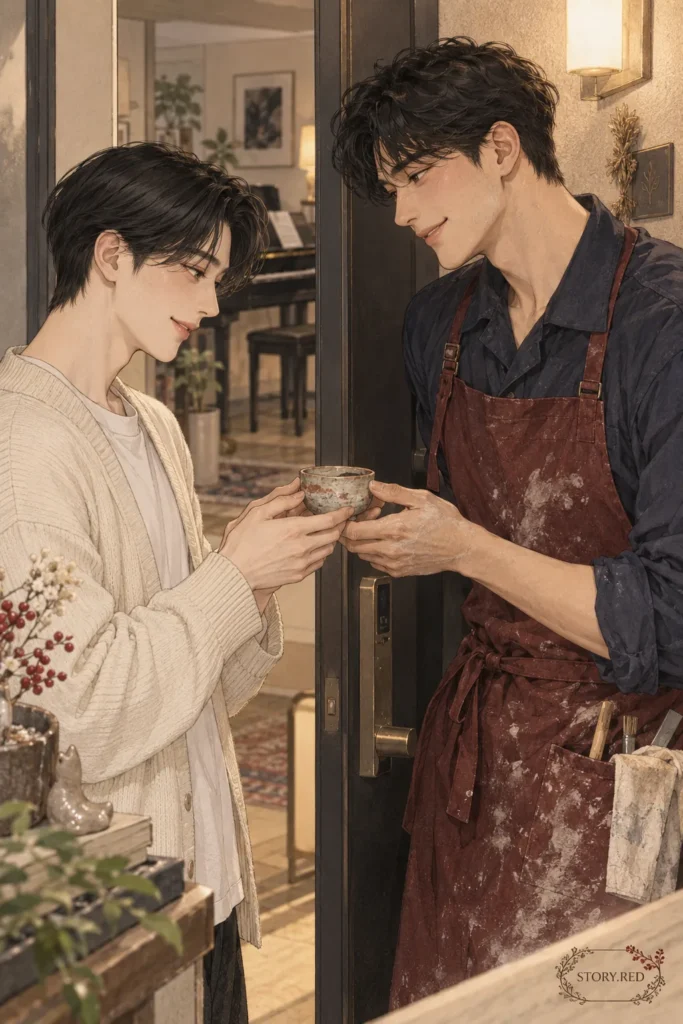
Jae could not read music and pressed the keys too hard, making them sound too loud. Eun taught him one phrase at a time, but grew impatient without meaning to.
“I'm sorry. I'm angry that I can't play the other half myself. I'm not angry with you.”
Jae stopped and asked if they should take a break. They did, without forcing the song to become a test.
Weeks passed. Eun's left hand and Jae's right began to find their way together. Eun rearranged the piece so Jae's part asked no more than he could do, instead of trying to squeeze the whole old song into it.
That night, after they finished playing, Jae took Eun's left hand and asked if he could hold it for a little longer.
Eun nodded. His heart beat harder than it had when he heard applause, though no one was watching.
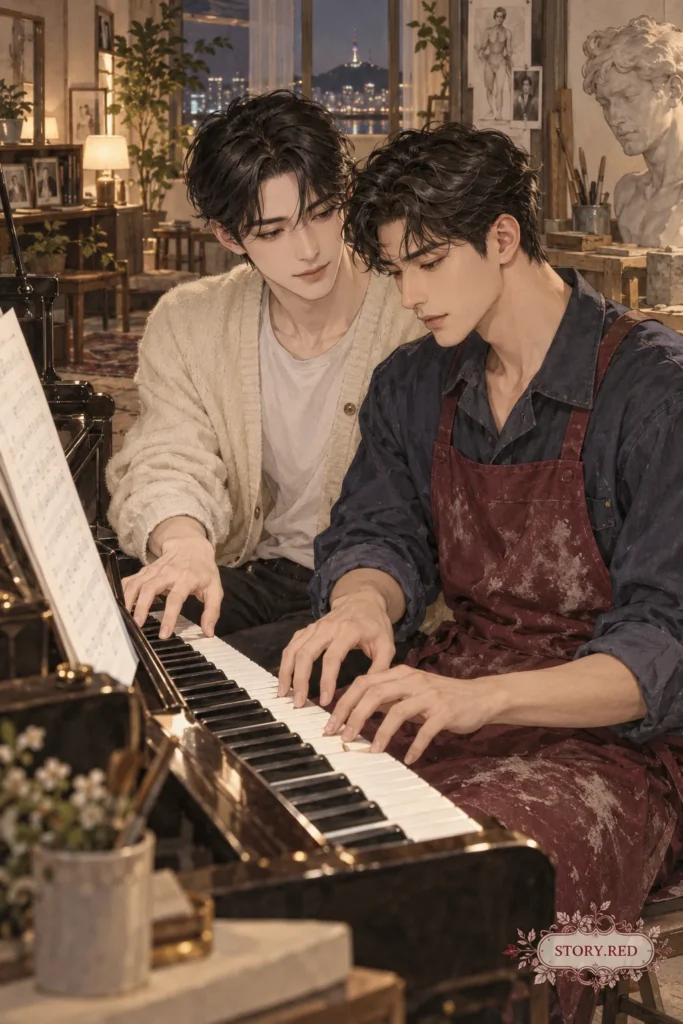
Eun noticed a bowl on Jae's work shelf, its seam plainly visible. He thought it was a failed piece.
“It belonged to my mother. I dropped it,” Jae said. “I repaired it so it can still be used, just not for hot food. Now it holds small things.”
The bowl was not forced to serve its old purpose in every way, and it was not thrown away.
Back in his room, Eun stopped reading the cancellation letters. He wrote to the organizers he had worked with, explaining plainly that he could not yet play as before, but wanted to propose a newly arranged piece for a class.
The first declined. The second did not reply. The third, a community arts center, asked when he could come talk.
Jae went with him, but let Eun tell his own story about the work from beginning to end.
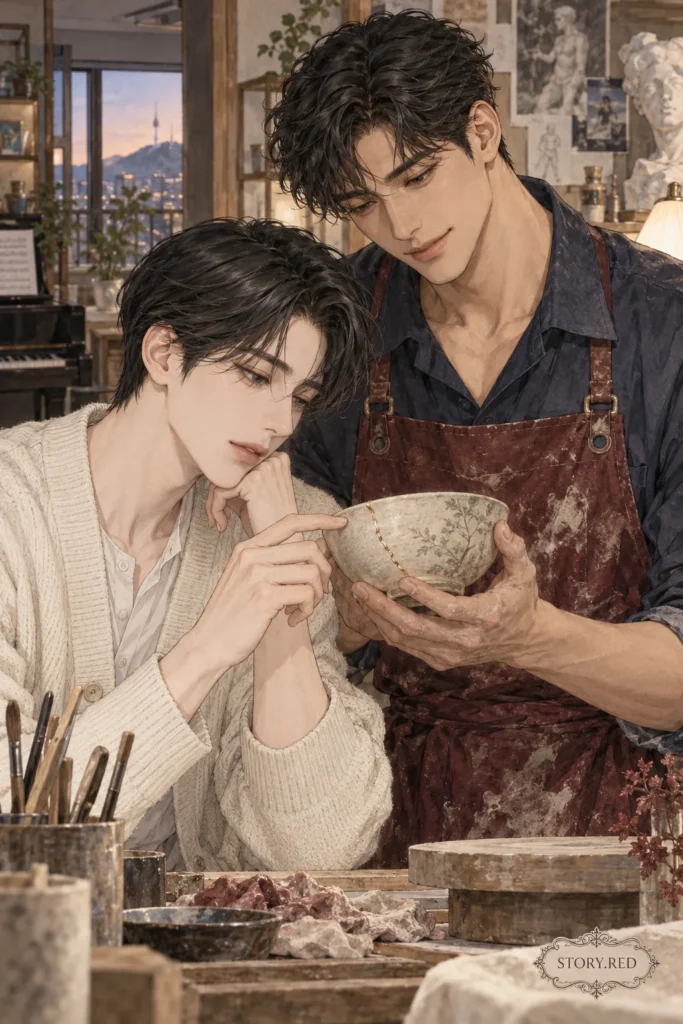
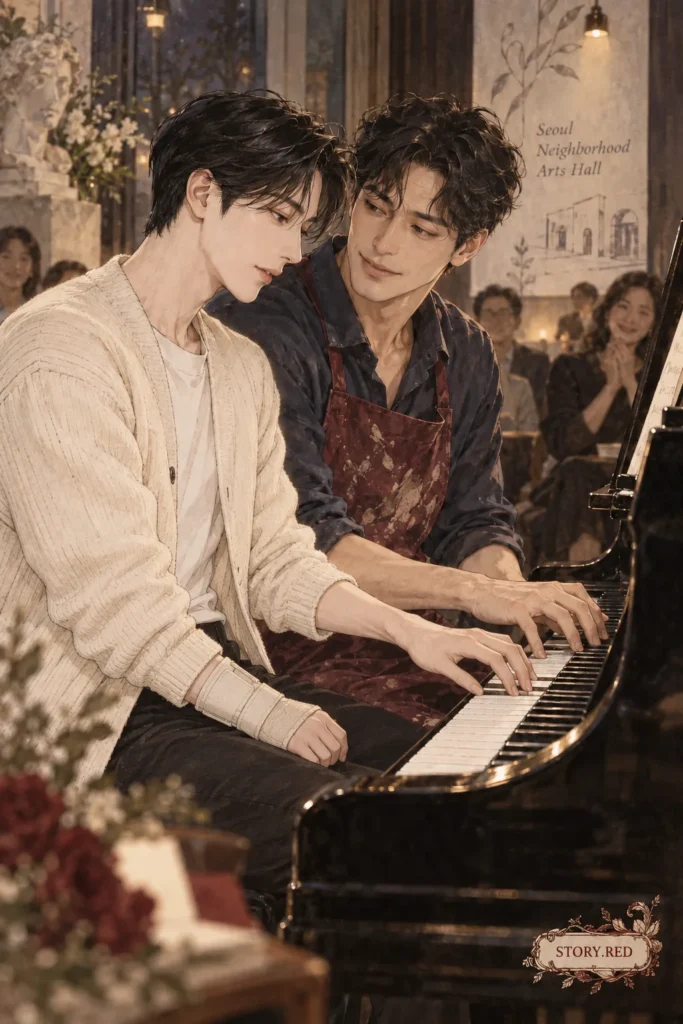
Twenty people came to the experimental performance. Eun took the stage with Jae, who was not introduced as a mysterious guest but credited for the part he played and the time he had rehearsed.
Jae missed one note in the middle of the song. Eun did not stop. He left a beat for him, and they began the next phrase together.
When the final note faded, the audience applauded. Eun felt so relieved he had to grip the edge of his chair. A child asked whether they could learn to play the piece.
“Yes,” he answered, without adding, if my hand gets better first.
Backstage, Jae said he would not have dared to keep playing if Eun had not waited for him. Eun looked at him and said he would not have dared to take the stage if Jae had not come.
“Then may I stay a little longer—as someone who likes you?”
Eun said yes and asked to hold his hand first.
Eun began teaching twice a week. He kept his appointments for his hand, and there were still tiring days and days when he could not play as he hoped. But the drawer of cancellation letters was no longer the first thing he opened each morning.
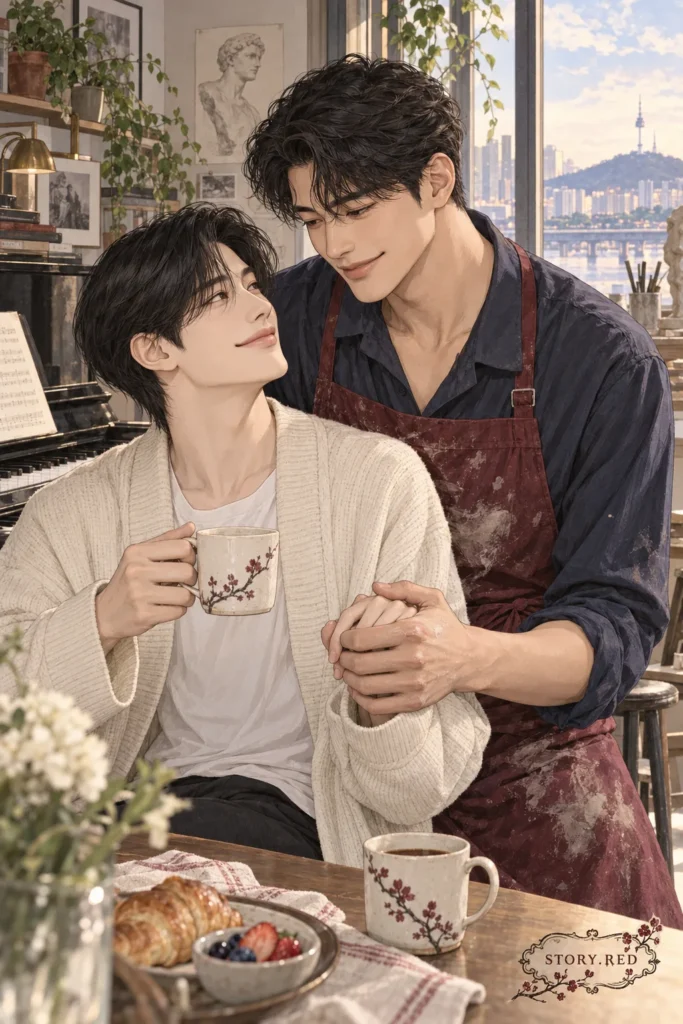
On the first anniversary of that knock, Jae set a new pair of cups by the window of room 704. Eun botched breakfast and broke an egg. They laughed and shared what they had made.
“Do you regret not knocking on another door?” Eun asked.
“I regret coming over angry at first,” Jae said. “Nothing else.”
Eun asked if he could kiss Jae. Jae said yes. Eun brushed his lips against Jae's, and they both grew so shy they turned to look out the window.
That afternoon, the piano sounded again from room 704. It was a new piece Eun had written for two people: he played with his left hand, Jae with his right. This time, they both knew when to rest and whom they were waiting for.
The End