
Flowers That Bloom After Midnight · Chapter 1
Flowers That Bloom After Midnight — Complete Story
AI translation from the Thai original ไทย
Original fiction and illustrations created with AI for STORY.RED. All characters and events are fictional.
Hana remembered the smell of her mother's soup, but not the sound of her voice. Her mother had died when she was little. Afraid that even her face would fade, the twenty-seven-year-old took the same alley home from work every night.
That night, a new door had appeared between two shops that used to share a wall. In the window, a blue flower slowly opened its petals as the clock passed midnight.
Min-ho, the thirty-one-year-old florist, asked what she wanted to remember.
“My mother's voice.”
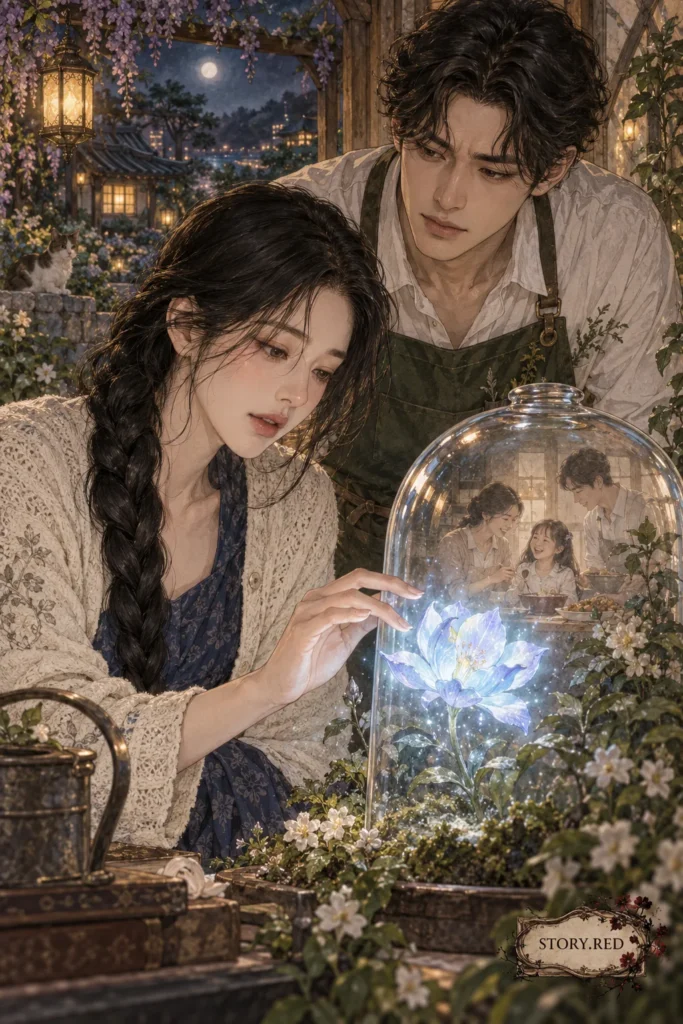
He set a flower in a cup of water. “Touch a petal and close your eyes. You'll hear her for one minute.”
Hana really heard her mother calling her to dinner. She began to cry. The memory lasted exactly as long as he had promised, but she already knew she would return.
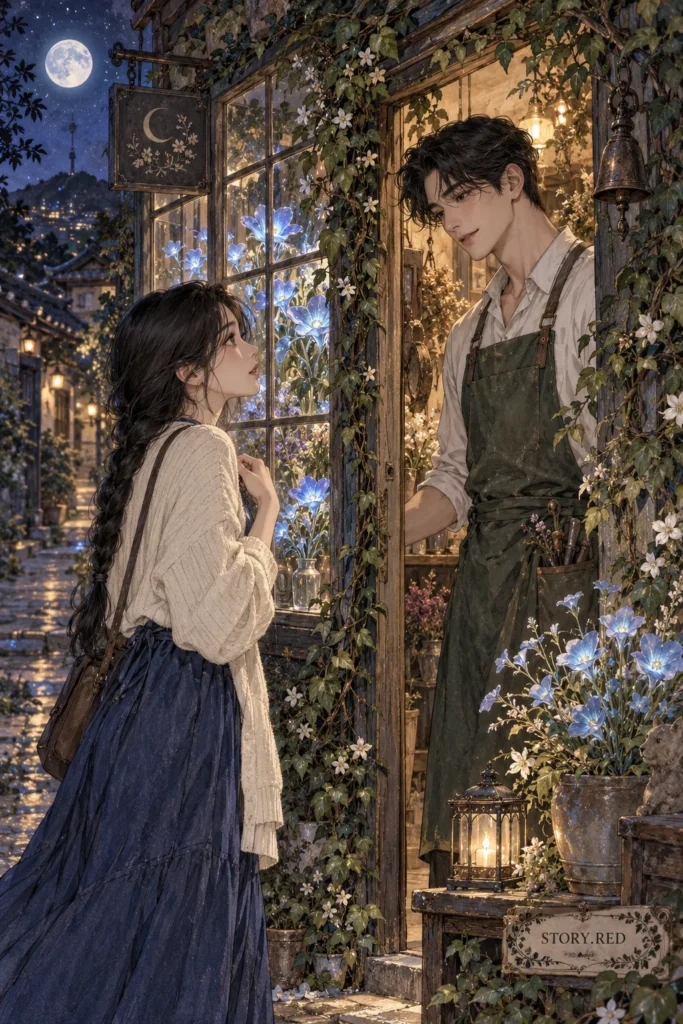
Each night, Hana bought one blue flower. One brought back a song her mother used to sing; another, her laughter after burning the rice. Min-ho would never sell her more than one at a time, no matter how much extra she offered.
“Longing makes us think that no amount will ever be enough,” he said.
After each flower faded, Hana stayed to help water the plants. Min-ho spoke of the garden behind the shop as if it were someone who was ill, but he never let her see it.
On the fifth night, Hana took the wrong way home. She thought she was tired. On the sixth, she could not remember what kind of tea her closest friend liked.
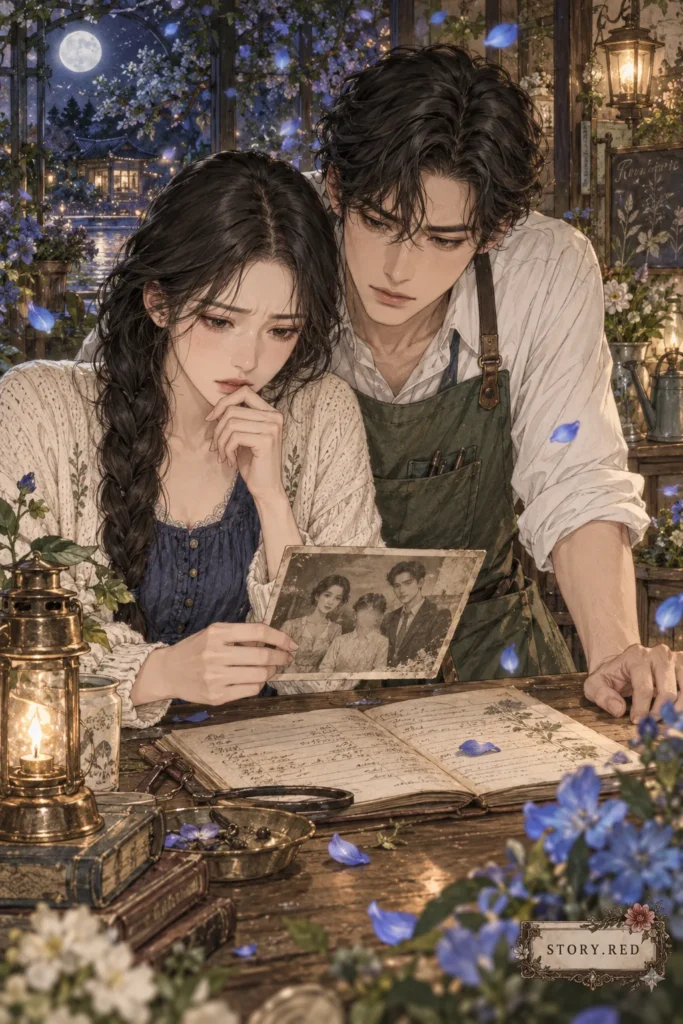
Min-ho found her crying in front of a photograph. He looked at the picture, then stopped with his hand suspended between them, as though he already knew the answer.
One friend's face had begun to fade from Hana's school photograph. Min-ho finally opened the ledger: each flower that restored one memory took a new memory in return, food for the mother tree.
“You knew, and you let me keep buying them?”
“I thought one minute was worth it to someone who kept coming back,” he said, lowering his eyes. “But I had no right to decide what you should lose.”
Hana asked him to name the memories that had been taken. He pointed to the entries she could no longer recall. This time, anger ran through her tears.
She discovered that Min-ho had used the flowers for years to hear his father's voice, until he forgot the person he had once loved.
“We're not saving memories,” Hana said. “We're just trading one person to be forgotten for another.”
Hana did not return to buy another flower. She came back with an archival map of the old public garden. The mother tree had once stood at its center; it had not fed on memories until a former shopkeeper pulled it up and trapped it in a bottle.
Min-ho agreed to open the back door. Dense roots coiled around glass bottles, each holding hundreds of glowing seeds.
“If we plant it again, this shop will disappear,” he said. “And the voices I've kept here will disappear with it.”
Hana did not tell him what to choose. She set down a shovel and waited.
It took a long time before he said, “My father wouldn't want him to be the only thing I remembered.”
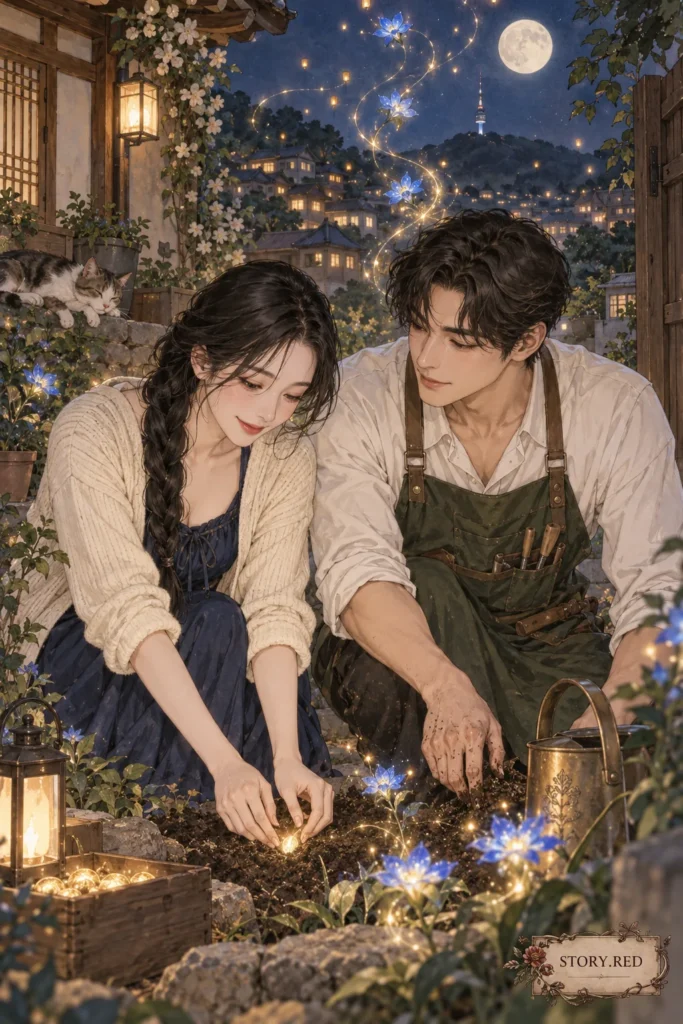
Together they lifted the roots from their pots. The work was hard enough to blister their hands. Min-ho bandaged hers, and this time he told her everything he knew before they began.
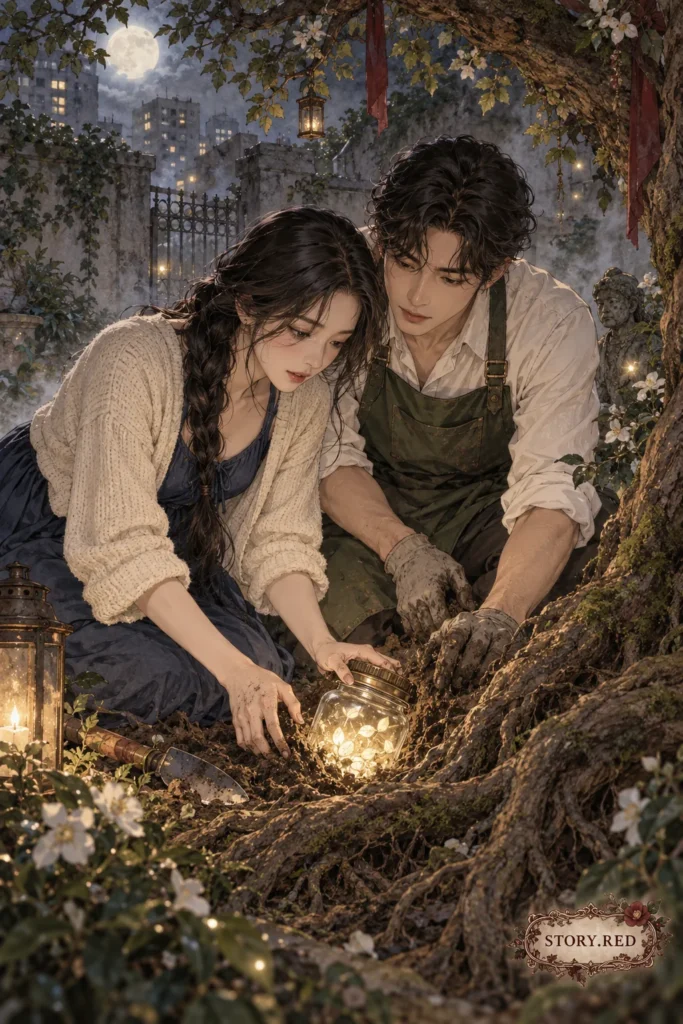
Before dawn, they replanted the mother tree in the abandoned garden. Hana poured the seeds from their bottles. Blue petals rose above the rooftops—not new memories, but memories once taken away, now finding their way back to those they belonged to.
Hana remembered her friend's laugh and his favorite tea. The borrowed sound of her mother's voice slowly grew fainter.
Hana wept, but her hands kept covering the roots with soil.
Min-ho regained the memory of the old woman who had taught him to grow plants. He realized that for years he had walked past her without saying hello.
When the sun rose, the shop in the alley was gone, leaving only a blank wall. Min-ho stood beside Hana with a bag of ordinary seeds. No flowers glowed anymore.
Hana asked relatives for old photographs and wrote the memories she could still reach in a notebook. She accepted that some voices would not return. Her mother still lived on in the things Hana did and the people she chose to care for.
Min-ho apologized to every former customer he could find. He helped the city care for the garden without charging, then opened a small shop selling ordinary flowers.
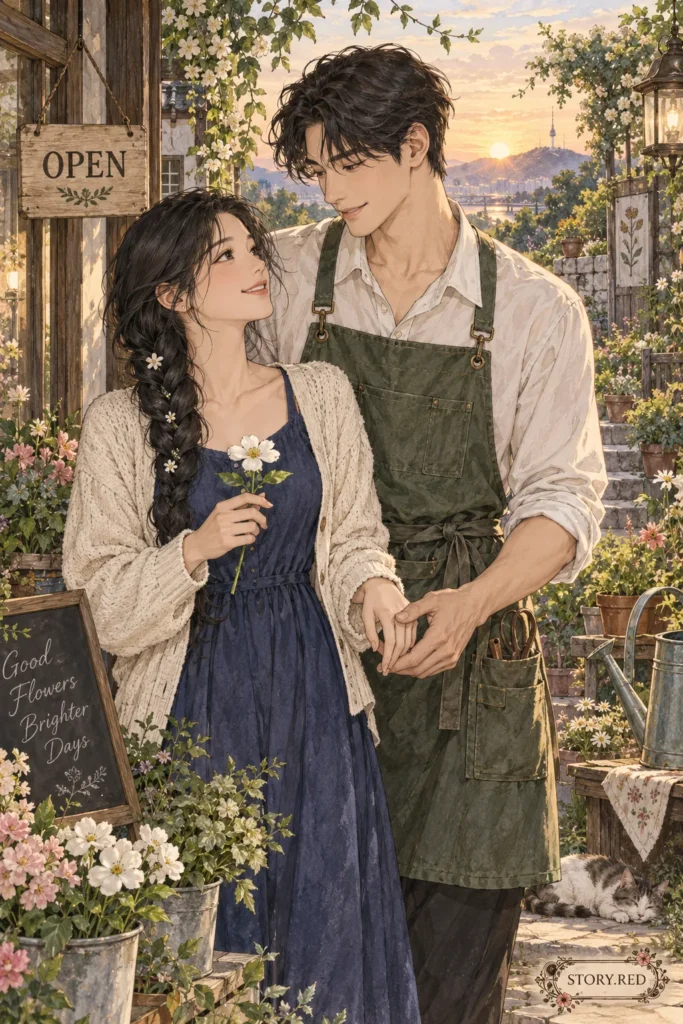
On opening day, Hana brought him a pot of white flowers.
“What can these flowers do?” he asked.
“They bloom, they fall, and then you have to plant them again.”
He laughed. Hana took his hand and said she wanted to try getting to know each other without buying someone else's past to fill the gaps.
Min-ho said yes, then invited her to breakfast. Hana could no longer remember the smell of her mother's soup clearly every day. But that morning, she knew the scent of fresh soil and the warmth of his hand completely.
The End