
The Photo with No Shadow · Chapter 1
The Photo with No Shadow — Complete Story
AI translation from the Thai original ไทย
Original fiction and illustrations created with AI for STORY.RED. All characters and events are fictional.
Sora developed every kind of film, except the kind customers wanted her to use to erase someone.
“This shop gives you the picture back,” she often said. “It can't give you back the past you wish you could change.”
At thirty, Sora received an unmarked envelope of film. The first photograph showed the old theater's lobby during the fire twenty years earlier. A man stood beneath a lamp, but cast no shadow on the floor.
In the next photograph, the man was gone. Only a bag remained—the one police had once identified as belonging to the arsonist. The film came with a threat: publish the images, or the sender would publish them with the shop's name.
Sora did not post them. She called Tae-seong, a thirty-four-year-old fire investigator who had once hired her to enlarge evidence photographs, and asked him to look at what they showed before deciding what it meant.
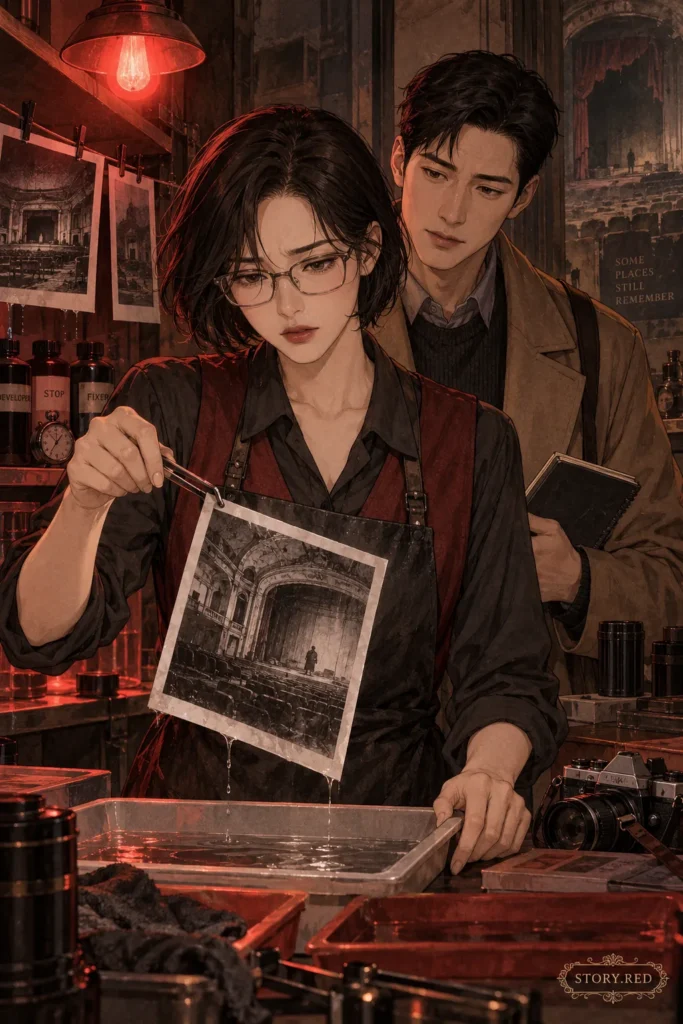
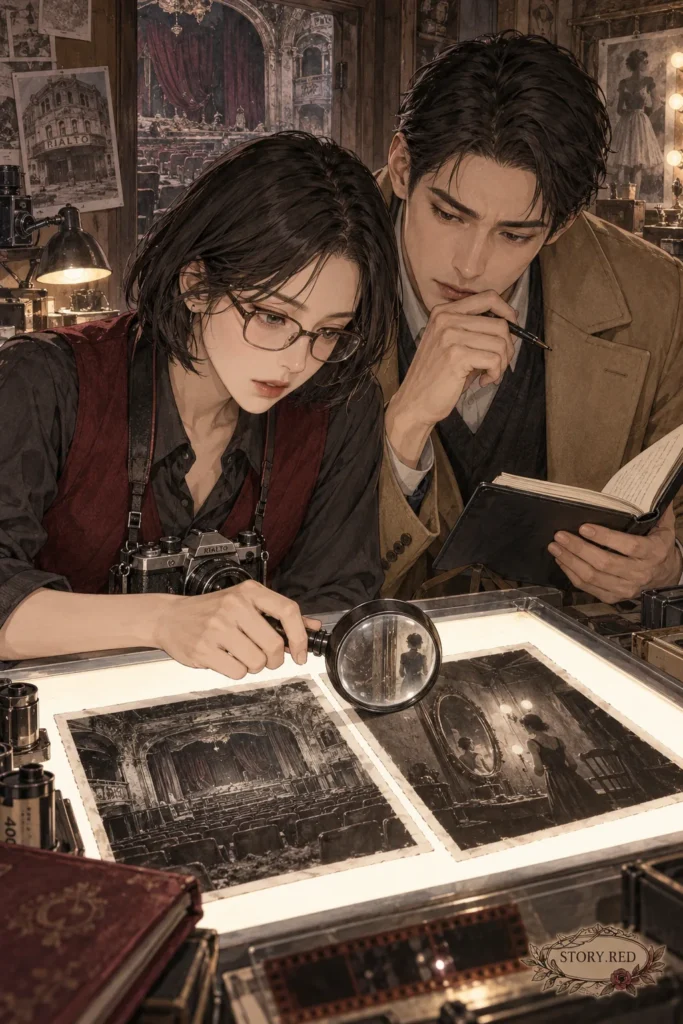
Tae-seong laid the two photographs on the light table. Sora noticed that the lamp in the first was brighter than in the second, yet the table legs' shadows had not shifted.
“Could it be a double exposure?” he asked.
She angled the magnifier toward the mirror behind the man. In its reflection were a clock and poster that did not belong to the lobby in the photograph.
The man had been transplanted from another day. This strip was a copy of photographs that had already been manipulated, not film exposed by a camera at the time of the fire.
The missing shadow did not prove he was a ghost. It proved that whoever made the image had forgotten the shadow.
The harder question was who wanted the old lobby to look haunted before Friday's vote on demolishing the theater.
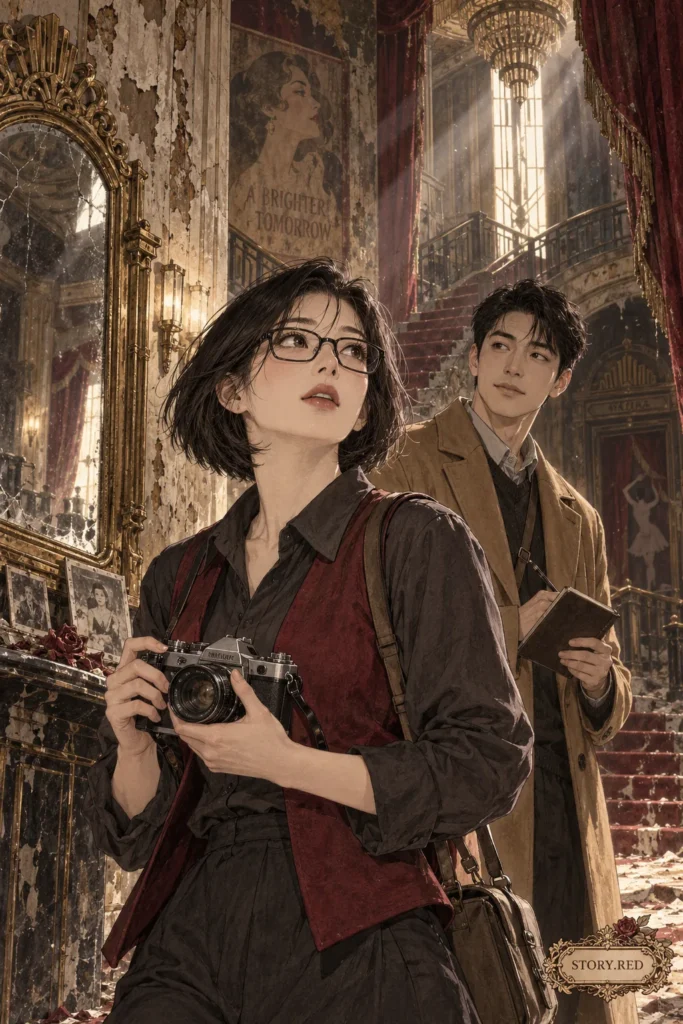
The caretaker let them into the theater with an official present. The mirror from the photograph was still there, but the poster reflected in it had advertised the theater's final performance before it closed.
Tae-seong compared the visitor records while Sora followed the direction of the light to the projection booth.
The man accused of starting the fire had been the projectionist. He served his sentence and moved away. Every old report said he had resented the owner; none asked why new wiring had been installed only a week before the fire.
Sora studied a patch of wall painted over. “We should find the original evidence, not invent a new story from a fake photograph.”
So they asked to inspect the inventory of items kept after the fire.
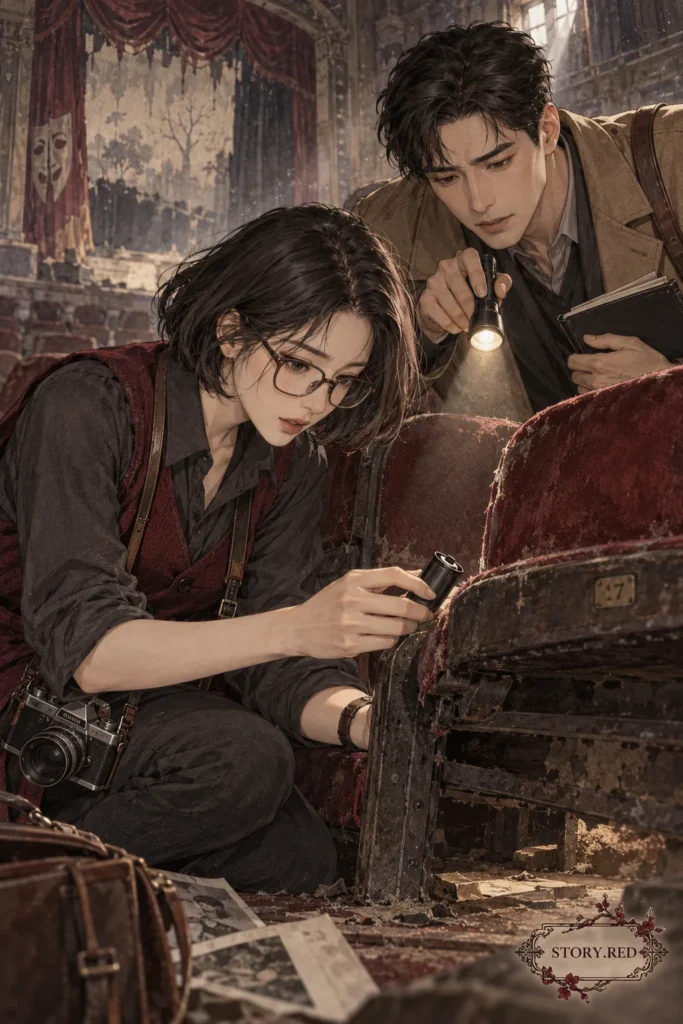
Beneath a seat removed during a structural survey, workers found a film canister. Sora asked them to preserve it according to procedure without opening it. Once they were authorized to examine it, they found photographs documenting the wiring renovation.
One photograph showed a delivery slip. Enlarged, it revealed equipment numbers that did not match the certificate in the theater owner's file.
Tae-seong checked the supporting records. The full cost of new equipment had been claimed, but secondhand, refurbished parts had been installed. The projectionist had once filed a complaint.
The current manager had sent the shadowless photographs. He wanted the community frightened enough to stop opposing the sale of the property. His forgery had stirred up the very files he thought everyone had forgotten.
Sora handed the evidence to the proper investigators. She did not announce a suspect based on her own guess.
Sora and Tae-seong found the former projectionist at an appliance repair shop. At first, he refused to look at the photographs.
“I told my story already. Everyone wanted to hear about a villain instead.”
Sora set copies of the delivery slip and the request to review his case on the table. She told him he could choose what parts of his story to make public.
A fresh investigation confirmed the wiring defects and the evidence that had been ignored. Proceedings to overturn the conviction began. With an adviser beside him, he agreed to tell his account.
Months later, he was cleared and received a formal apology. Sora never called herself his rescuer. Before the exhibition text went to print, she let him review every line.
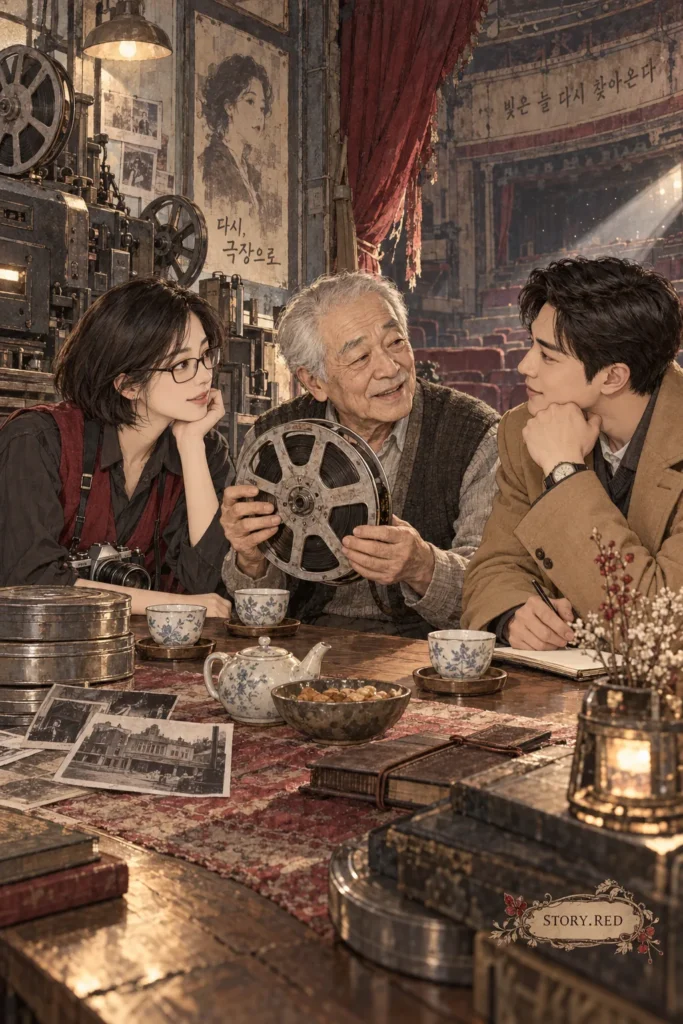
The community raised funds to turn the theater's front lobby into a small screening room. They did not restore the whole building in a day, but they made a place where a former employee could walk in without being pointed at.
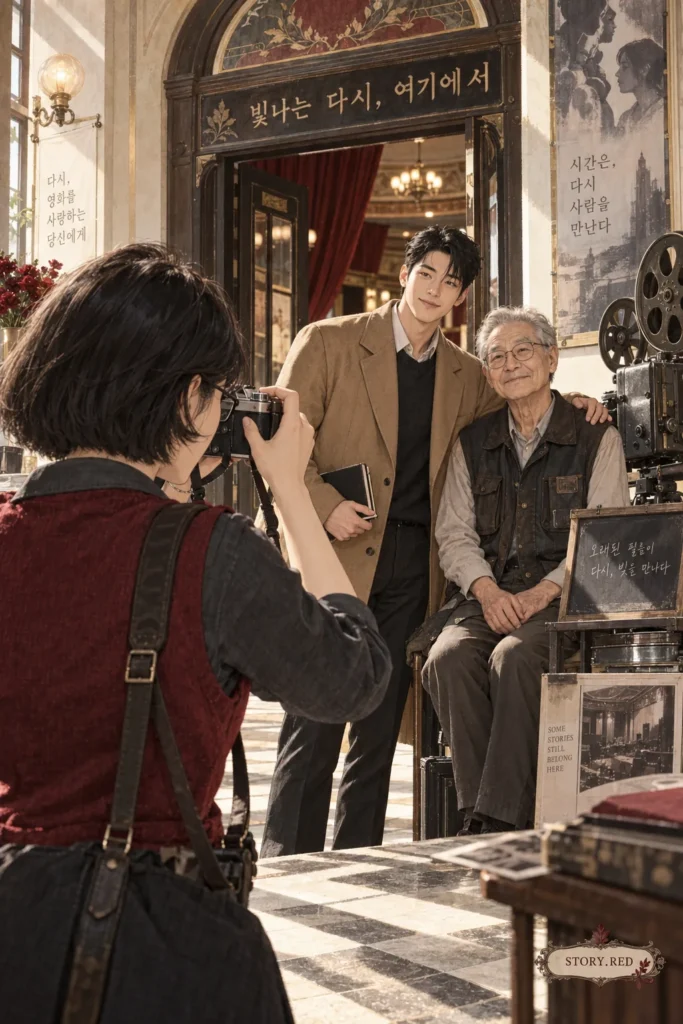
Sora asked to photograph the former projectionist and Tae-seong together. Morning light from the doorway cast both their shadows clearly across the floor.
“Can you take out the shadows this time?” the old man joked.
“That costs extra,” she said. All three laughed.
Tae-seong helped her pack the tripod and asked her to get a meal with him. Sora said yes, but first she wanted to put the film away. He walked beside her without hurrying.
The final photograph was hung outside the screening room. No ghost's name, no threat—just the names of two people and the date it was taken. Sora thought that was all the information they should have been given from the start.
The End